
Table of Contents
- Why Mixing Furniture Styles Works in Modern Interiors
- The Key Principles for Blending Furniture Without Clashing
- Common Pitfalls to Avoid When Combining Different Styles
- Step-by-Step Guide to Mixing Furniture Styles Successfully
- Favorite Style Combinations That Work in Any Home
- Mistakes to Watch Out For When Using Contrasting Styles
- Pro Tips for Achieving a Designer-Approved Look
- Final Thoughts
Why Mixing Furniture Styles Works in Modern Interiors
The world of interior design has moved beyond matchy-matchy furniture sets, embracing an eclectic, curated approach that lets personality and creativity shine. Today’s best-designed homes feature a blend of vintage treasures, contemporary shapes, and global influences—all arranged in a way that feels intentional, not chaotic. This shift is evident in new builds and renovated spaces, where mixing furniture styles results in rooms that tell a truly personal story.
One reason mixing styles has become so popular is their positive psychological impact. Thoughtfully layered furniture encourages creativity, self-expression, and comfort. Your home feels less like a showroom and more like a reflection of you. This trend is evident in inspirational design galleries and curated furniture shops in Newport, CA, which showcase collections designed precisely for mixing while ensuring effortless harmony.
The secret to a harmonious interior is understanding the difference between harmony and uniformity. You don’t need all your pieces to match; instead, seek a common thread, such as a repeated material, finish, or silhouette, so the room feels pulled together. Start with a color palette that offers some flexibility.
Common Pitfalls to Avoid When Combining Different Styles
It’s easy to get carried away with style-mixing, but experts caution against layering too many looks at once. Limiting yourself to two or three styles per room helps maintain focus. Ignore scale and risk a disjointed room—oversized furniture can dwarf delicate accent chairs, while minuscule vintage pieces might look lost beside imposing modern pieces. Don’t neglect flow and function. Walkways should remain clear, and layouts should suit your lifestyle, no matter the style. If you’re looking for inspiration or pieces to blend styles seamlessly, furniture stores in Newport, such as Newport Home & Design and Coastal Living Interiors, offer curated selections that make mixing styles approachable and stylish.
Step-by-Step Guide to Mixing Furniture Styles Successfully
- Assess your anchor piece: This might be a sofa, dining table, or bed—choose one statement-making item as your room’s foundation.
- Select complementary accents: Pair your anchor with smaller furnishings of different styles, making sure at least one element (such as color, material, or height) is echoed throughout.
- Play with textures and patterns: Mix soft textiles with metallics, smooth woods with woven rugs, or geometric shapes with natural motifs. These contrasts add visual depth while reinforcing cohesion.
- Add unifying elements: Use cohesive artwork, rugs, pillows, or lighting in matching hues or motifs to bring everything together, even if the furniture diverges in style.
Favorite Style Combinations That Work in Any Home
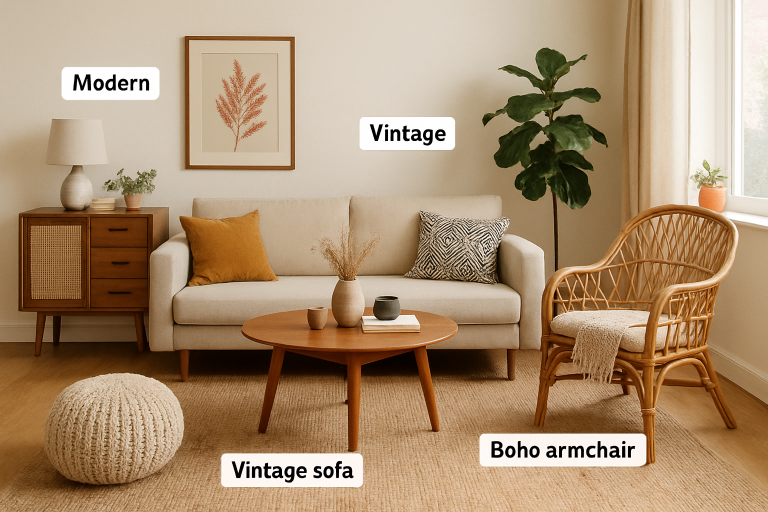
- Mid-Century Modern meets Boho: Pair the clean lines of mid-century silhouettes with globally inspired textiles and earthy, organic shapes for relaxed sophistication. Layering kilim rugs or macramé art with streamlined wood pieces is easy to achieve this blend.
- Classic Traditional + Industrial: Ornate mirrors and rich textiles sit beautifully alongside raw woods and black steel frames. This combination celebrates both elegance and edge.
- Farmhouse charm with contemporary edge: Weathered wood and sliding barn doors harmonize beautifully with minimalist chairs or sleek light fixtures for an inviting yet current appeal.
Mistakes to Watch Out For When Using Contrasting Styles
Avoid over-accessorizing; too many small items can distract the eye and break visual continuity. Likewise, under-accessorizing causes the space to feel incomplete. Always balance form with function—don’t sacrifice comfort for looks, and keep practicality in mind. Lastly, beware of clutter. A well-edited space always reads as more curated and sophisticated.
Pro Tips for Achieving a Designer-Approved Look
- To tie disparate styles together, use a few consistent materials or finishes (such as brass, matte black, or light oak) throughout your furnishings.
- Use repetition to your advantage. Repeat key colors, shapes, or motifs subtly around the room for rhythm and unity.
- Less is more. Paring back your selections makes each piece more impactful and ensures your mixed-style interior feels intentional and chic.
Final Thoughts
Mixing furniture styles allows you to create a home that feels personal, dynamic, and thoughtfully curated. You can blend contrasting pieces without creating visual chaos by focusing on harmony through color, texture, scale, and repeated elements. Avoid common mistakes like overcrowding or ignoring function, and use anchor pieces and unifying accents to guide your design choices. Experiment with combinations, but keep the space balanced and intentional to achieve a cohesive look. Ultimately, a well-mixed interior tells your story, reflecting style and personality while remaining functional and inviting.